
Introduction
The digital marketing landscape is changing rapidly with the advent of Artificial Intelligence (AI). Search Engine Optimization (SEO) has long been the bedrock of online visibility, but AI-based search platforms are changing the way users discover information. Now search engines and AI assistants like ChatGPT, Google AI Overviews, Microsoft Copilot, and Perplexity AI offer direct, conversational answers instead of just a list of web pages. This transition introduces a new optimization method called AI Search Optimization (AISO). For businesses, marketers and any social media strategist, understanding AISO is essential if they are to remain competitive in an increasingly AI-driven search environment.
What is AI Search Optimization (AISO)?
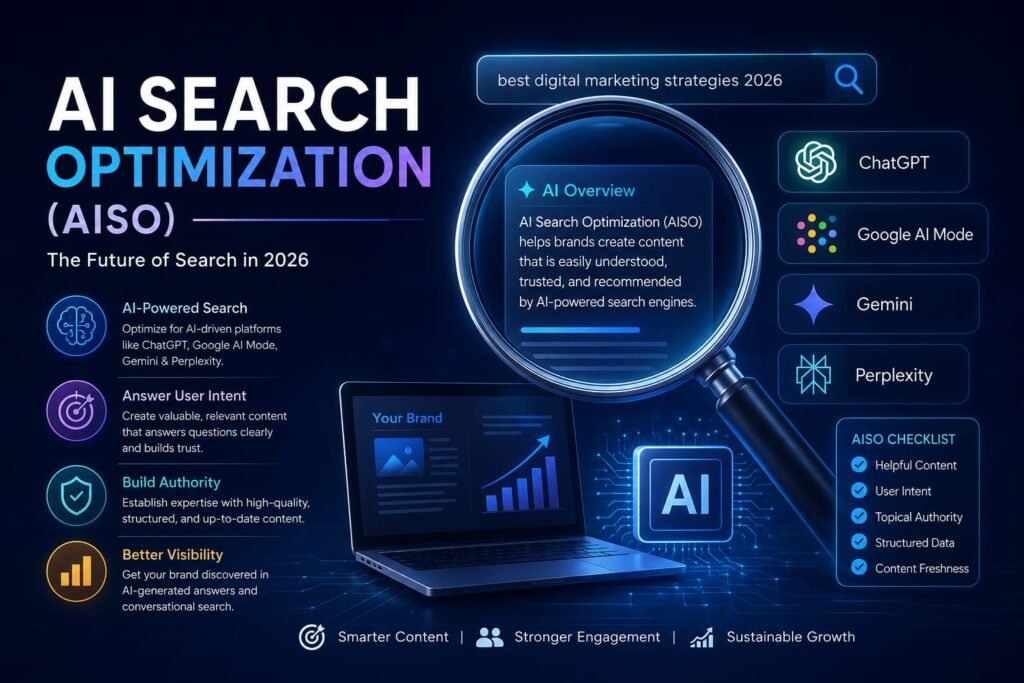
AI Search Optimization (AISO) stands for the optimization of digital content to be understood, interpreted, and referenced by artificial intelligence-powered search engines in their responses. AISO differs from traditional SEO, which focuses primarily on keywords, backlinks, and rankings, in that it stresses:
Premium Quality Content
User’s goal
Semantic relevance
Structure information
Who’s in charge? Who’s believable?
Colloquial language
AISO provides social media strategists the opportunity to extend brand visibility beyond traditional search engine results
Why AISO Matters in 2026 and Beyond
AI search tools are now the go-to for users looking for quick and accurate answers. Instead of clicking through multiple websites, users receive summarized information generated from trusted online sources.
Some benefits of AI Search Optimization are:
- Increased visibility in AI-generated responses
- Better organic brand exposure
- Improved website authority
- Higher-quality traffic
- Enhanced user trust
- Long-term digital growth
With AI-friendly content, an experienced social media strategist can leverage social engagement to maximize online reach and authority.
Key Components of AI Search Optimization
Create High-Quality Content
AI models love useful and unique and informative content. Articles must be well written, demonstrate expertise, and answer readers’ questions. Quality is never more important than keyword stuffing.
Focus on Search Intent
Targeting keywords is less important than understanding why users search for certain topics. Content should help to solve problems, answer questions and give actionable insights. A good social media strategist knows how the audience behaves and creates content that matches user intent on various digital platforms.
Use Natural Languages search for certain topics.
Modern AI models understand conversational writing much better than robotic keyword repetition. Modern AI models understand conversational writing much better than robotic keyword repetition.
Build Authority
AI systems prefer information from trusted and authoritative sources.
Increase authority by publishing:
- Case studies
- Industry research
- Expert opinions
- Original insights
- Updated content
A professional social media strategist can amplify this authoritative content across social platforms to improve brand recognition.
Best Practices for AI Search Optimization
o maximize success with AISO, businesses should follow these proven strategies:
Publish Comprehensive Content
Create detailed articles that answer user questions thoroughly rather than covering topics superficially.
Optimize for AI Readability
Use simple language, logical formatting, and concise explanations that AI systems can easily interpret.
Update Content Regularly
AI models value fresh, accurate, and up-to-date information.
Demonstrate Experience
Include real-world examples, expert opinions, and practical insights whenever possible.
Improve Technical SEO
Fast-loading pages, mobile responsiveness, schema markup, and secure websites continue to support both traditional SEO and AISO.
A forward-thinking social media strategist understands that combining technical optimization with engaging content creates stronger digital results.
Conclusion
AI Search Optimization (AISO) is quickly becoming an essential component of modern digital marketing. As AI-powered search engines continue to change how users find information, businesses must adapt their content strategies to remain visible and competitive.
Success in AISO requires publishing valuable, structured, and trustworthy content while focusing on user intent and semantic relevance. At the same time, an experienced social media strategist plays a crucial role in amplifying content, building brand authority, and creating meaningful audience engagement across digital platforms.
Organizations that embrace AI Search Optimization today will be better positioned to increase visibility, attract qualified traffic, and establish long-term authority in the future of AI-powered search.